Lola McClane introduced our speaker: Tara Sundem, Executive Director at Hushabye Nursery. As a neonatal nurse practitioner, Tara brings over 28 years of experience caring for babies in the neonatal intensive care unit. She was drawn to babies suffering from neonatal abstinence syndrome with the opioid epidemic. Her passion to transform the healthcare experience for the babies and their families has led to her founding Hushabye Nursery, an Arizona non-profit dedicated to caring for opiate-exposed newborns in their first weeks of life.
Tara's career in healthcare has spanned across the valley neonatal intensive care units. She most recently served as Executive Director at Hushabye Nursery. Under Tara's leadership, Hushabye Nursery has grown from an idea to "save the babies" in 2016 to a new care model serving the entire family system impacted by the opioid crisis starting prenatally and continuing after discharge from the hospital. Tara holds a Master of Science from Arizona State University and is a board-certified Neonatal Nurse Practitioner. She lives in Gilbert with her husband, two sons and a dog.
CLICK HERE to download the slides used during the presentation
In 2016 there were up to ten infants at a time in withdrawal in the neonatal intentive care, and it was clear the infants did better with some circumstances and caregivers than others. Tara heard about a program where these babies were taken to a private space of their own. Hushabye Nursery now has thier own 12-bed facility.
Every day in Arizona, an average of two babies are born passively dependent in Arizona. Some suffer intensively.
She shared some statistics about the opioid epidemic in Arizona. The United States consumes 80% of the global opiod supply. four out of five new heroin users start by misusing prescription painkillers. More than two Arizonans die each day from an opioid overdose. Four out of ten Arizona adults know someone addicted to prescription painkillers. 431 million opiod pills were prescribed in 2016 - enough for every Arizonan to have a two-and-a-half week supply. Drug overdoses take more lives than car crashes in Arizona. In the last five years 86% of persons who dies from an opoid-related cause were using multiple substances. Addiction to prescribed painkillers is not talked about as much as it should be.
Neonatal Abstinence Syndrome (NAS) is a condition experienced by an infant after birth due to sudden discontinuation of exposure to certain drugs such as opioids which were used by their mother during pregnancy. Whether the drugs are legal or illegal, the baby goes through withdrawal. NAS withdrawal symptoms are similar to those of adults going through withdrawal and can last up to a year.
If care starts prenatally, hope is improved. When meeting a mother-to-be for the first time, Tara sincerely and enthusiastically congratulates her for being a good mom because she is taking action to do something protect the life and health of her child. The act of contratulating the mom breaks down walls and begins building trust. There are several things that are actionable. The mother can be connected with nonjudgmental care providers. They can take birthing classes. Safety monitors - individuals who are willing and close to the mother - who will offer stability and monitor what is going on so withdrawal symptoms and interventions can be effectively managed. Breastfeeding is encouraged.
Since 2019, they have been working with moms prenatally. DPS wants children to be safe. Parents want health and safety for their children and want to be with them. A collaborative effort to take advantage of the Hushabye program keeps the children out of the foster care system.
Management of NAS that is non-pharmacological are aving the parents involved as possible. The highly stressed babies do better if the stimulation in their environment is decreased in q quiet space with lights turned down low. Skin to skin touching is therapeutic, so rooming-in or nesting so touch is readily available is beneficial. Small, frequent feedings in warmed bottles is the next-best thing to breastfeeding, which is strongly encouraged if not contraindicated. Infant massage is utilized as is the use of warm compresses on their tummies. Biology has healing effects. Simple things to do, but can make a huge difference.
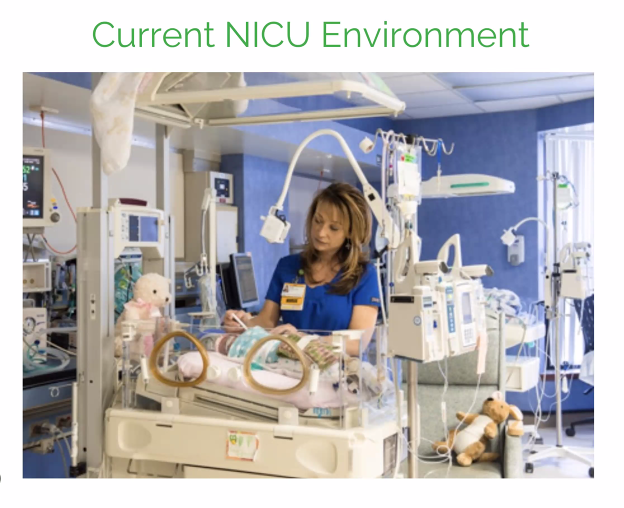
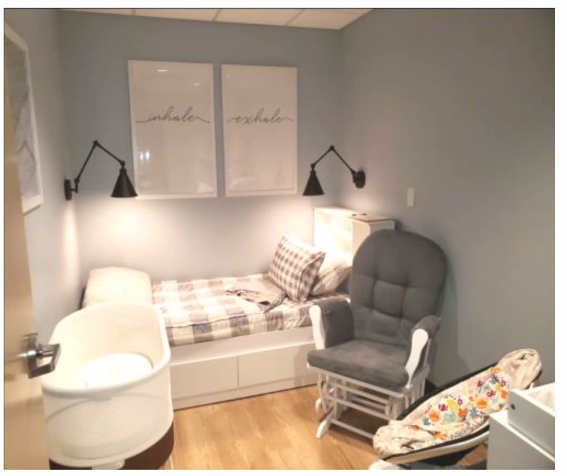
Pictures of a typical NICU environment compared to the peaceful environment in the Hushabye facility spoke for themselves.
Tara talked a bit about Opioid Use Disorder (OUD), explaining that it is a brain disorder, not a moral failure. How we talk impacts the way we think. Improved understanding that opioid use disorder is a complex interplay of biology and environment will decrease stigmatize and increase access to healthcare.
She explained why maternal "cold turkey" treatment for maternal patients is not the way to go. It increases the risk of miscarriage as well as the incidence of relapse, which is 95% with "cold turkey."
Medication-Assisted Treatment is the recommended way to go to reduce harm. It combines behavioral therapy and medications to treat substance use disorders and has proven effectiveness with Opioid Use Disorder. The incidence of relapse is 45-75% more likely to succeed with medication, and 85-100% more successful when behavioral health services are added.
Many mothers will be on MAT for the rest of their life. Pregnancy outcome is improved with the mother becoming healthy.
They are taken to the Hushabye facility when mommy is released from the hospital. They receive one-to-one care 24/7. If the infants needs are met immediately, it can prevent their need for medicine.
The Hushabye nursery environment is clearly different than the NICU environment. It's use makes a huge difference in cost. 85% go home with their families because they are connected to all services that are out there - housing, food, transportation, then how to get healthy.
They believe that if they can keep a mom and baby together through one year of age, there will be reduced repeat issues when that child matures.
The facility always needs diapers. They also need baby cuddlers between the hours of 6 AM and 6 PM. They are located in Phoenix near 30th street and McDowell. They serve all of Maricopa county. With Zoom, they are enabled to have further outreach. Visit
hushabye nursery.org to learn more.





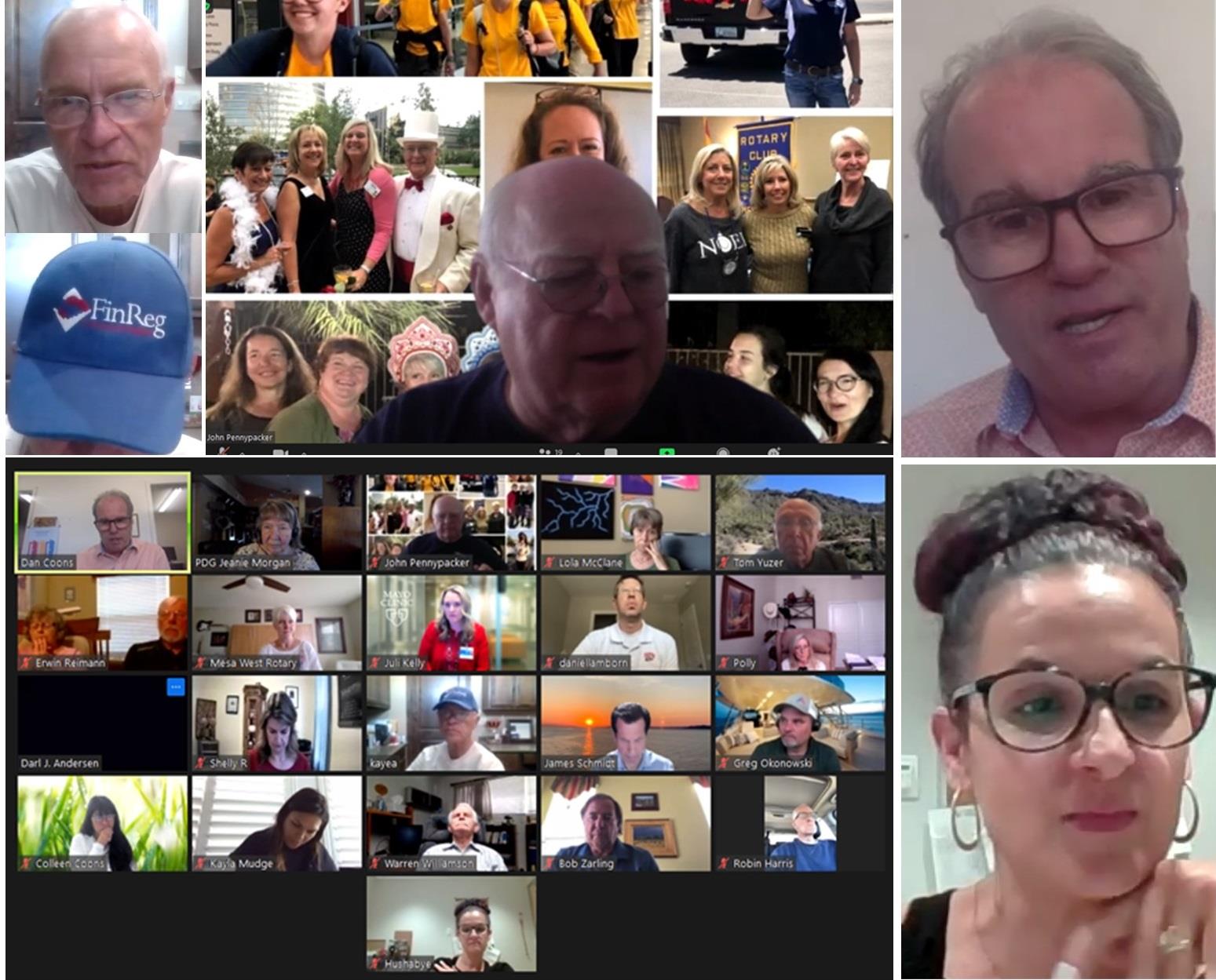 As has become customary, President Dan opened the Zoom platform at 11:15 so members and guests could enjoy some casual conversation prior to the meeting actually starting.
 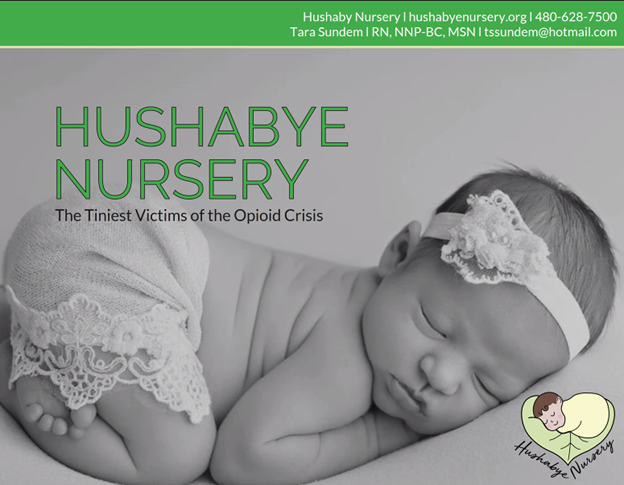 Program - Tara Sundham - Hushabye Nursery
 We have a very special community service project for March. This project is part of a district grant we have received and benefits the 7th Street Food Pantry. We will be providing labor to remove old flooring tile in preparation for new flooring. The new flooring will be professionally installed but we need a few very hardy people to break up and remove the existing tile. This will be a very labor intensive job and requires those with good stamina and strong backs. For this part of project we are looking for 5 people Friday March 19th beginning at 9 am. I will set up a sign up sheet but please also contact Don LaBarge by email or phone if you can help that day 480.213.1617
  Not all that long ago, Bryan Goetzenberger, our Mesa West Vocational Service Chair, interviewed Daveeonna and certified to The Rotary Vocational Fund of Arizona that Mesa West Rotary would be her sponsoring Rotary Club for a grant to study to be a Certified Nursing Assistant. Daveeonna has now graduated from her program and passed her certification exam.
  Foundation Chairman Chuck Flint has offered to use some of his accumulated recognition points to increase Mesa West support of The Rotary Foundation. For the foreseeable future, he will match donations, in $100 increments two for one. If you donate $100, he will transfer $200 in recognition points to your account. Whether you are striving to receive your first Paul Harris Fellow or striving to reach the next level, this is a great way to move that achievement closer.