

 From: news.gcu.edu/2020/04/electrical-engineering-tech-students-still-wired-in/ The article was written by GCU senior writer Lana Sweeten-Shults.
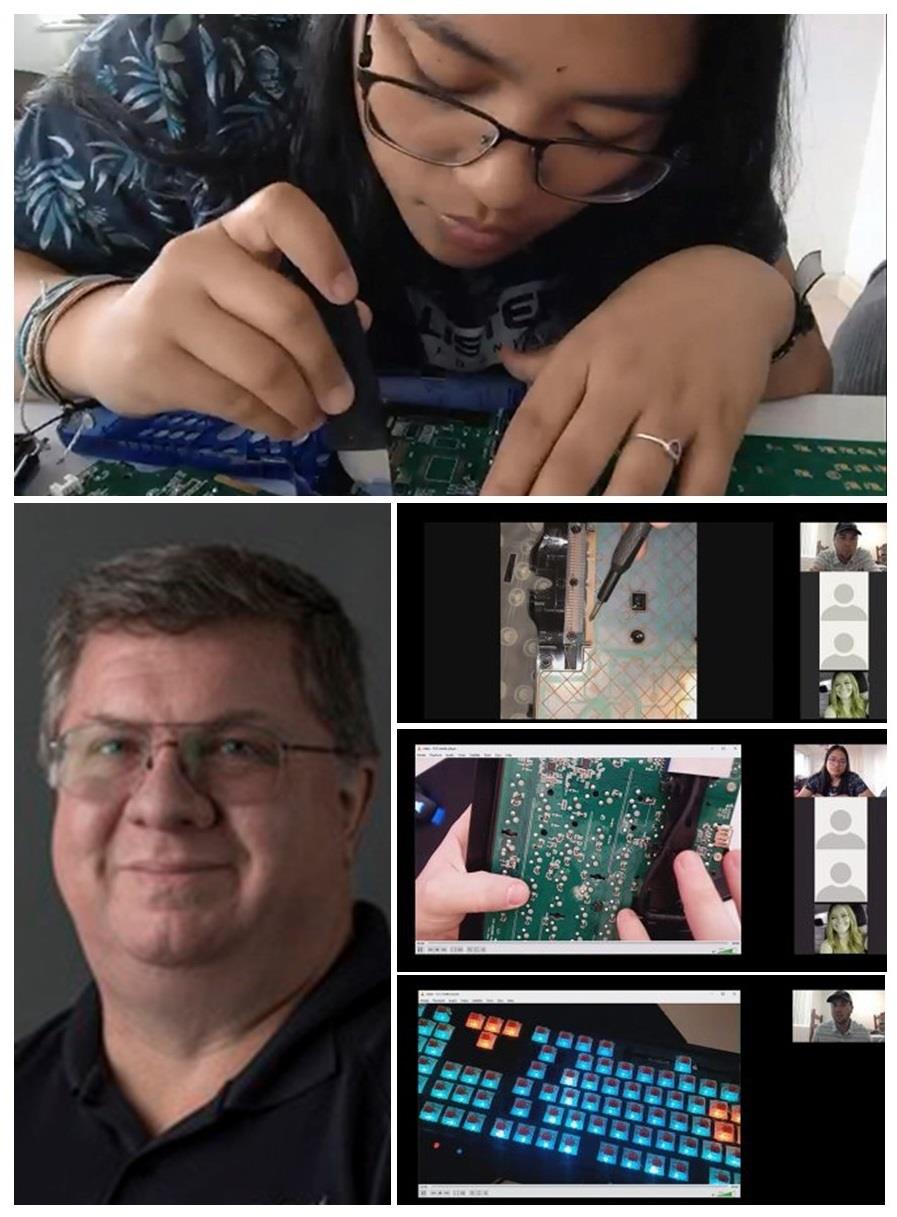
Grand Canyon University Electrical Engineering Technology Program Lead Ed Koeneman gave his students their graduation presents early - an idea sparked by the inevitability of ground classes moving to an online environment in the shadow of COVID-19.
Instead of a hearty "congratulations" or a hug or high-five, Koeneman handed his students a bouquet of toolkits and voltmeters, then conducted them toward a box of broken and malfunctioning apparatuses, gadgets and gizmos.
It was high light-bulb moment.
His students' mission, which they had to accept as students in his EFT 340 Electrical Troubleshooting and Maintenance class, was to pick one of these broken and malfunctioning apparatuses, gadgets and gizmos and then bring it home.
They would spend their coronavirus-mandated, shelter-at-home time fixing these broken things, then report their results during a class meeting via remote video conferencing platform Zoom.
"It was a unique opportunity for me, because we were going to troubleshoot these items in class together and critique each other's work. But doing troubleshooting at home and being able to debrief together, I think, worked well," said Koeneman, who himself has been doing a little gadget tinkering at home over the past couple of years, converting his gas-powered car to an electric-powered one.
Repairing electrical and electronic devices at home, then revealing those fixes on Zoom, was just another way GCU faculty and students are adapting from an on-ground setting to a distance-learning environment.
In the Electrical Troubleshooting and Maintenance class, Koeneman exposes students to as many electrical and electronic systems as possible during the first 10 weeks of class, from the solar-and wind-powered systems to residential and industrial wiring and electric motors.
In the last five weeks of class, students take a broken piece of equipment that Koeneman has collected during the school year from a goody box. They fix those devices in class and in their residence halls, then meet in class to review how students were able to repair those pieces of equipment.
The coronavirus changed those plans for everyone, But Koeneman and his EET 340 students, including senior Jake Johnson, adapted well. Johnson thought of grabbing a Lego Mindstorms control module from Koeneman's box of broken devices even though he'd never built a Lego Mindstorms programmable robot before.
"So instead of trying to fix a device I hadn't used before, I decided to try to troubleshoot a gaming keyboard of mine I had been using for a couple of years that had stopped working," said Johnson who's finishing his classes online from his home in Phoenix. Instead of repairing the keyboard before the class reunited for its Zoom meeting and reviewing the repair with his classmates via prerecorded video, he decided he was going to fix his keyboard live online. He set up his phone as a webcam, then removed the keys from the keyboard so he could see the circuit board inside.
"I looked to the bottom and saw signs of water damage... I cleaned up a lot of the connections and contacts on the inside, I got it working, said Johnson, who recalls a spilled soda incident.
Koeneman emphasized how this class isn't about the thing you're troubleshooting. "It's about applying this methodology over and over again to various electronic systems," Koeneman said. As it turns out, it's a methodology that has translated well to the distance-learning world. And it's a graduation gift his students aren't likely to forget.
To read the full article, click the link at the top of the story.